
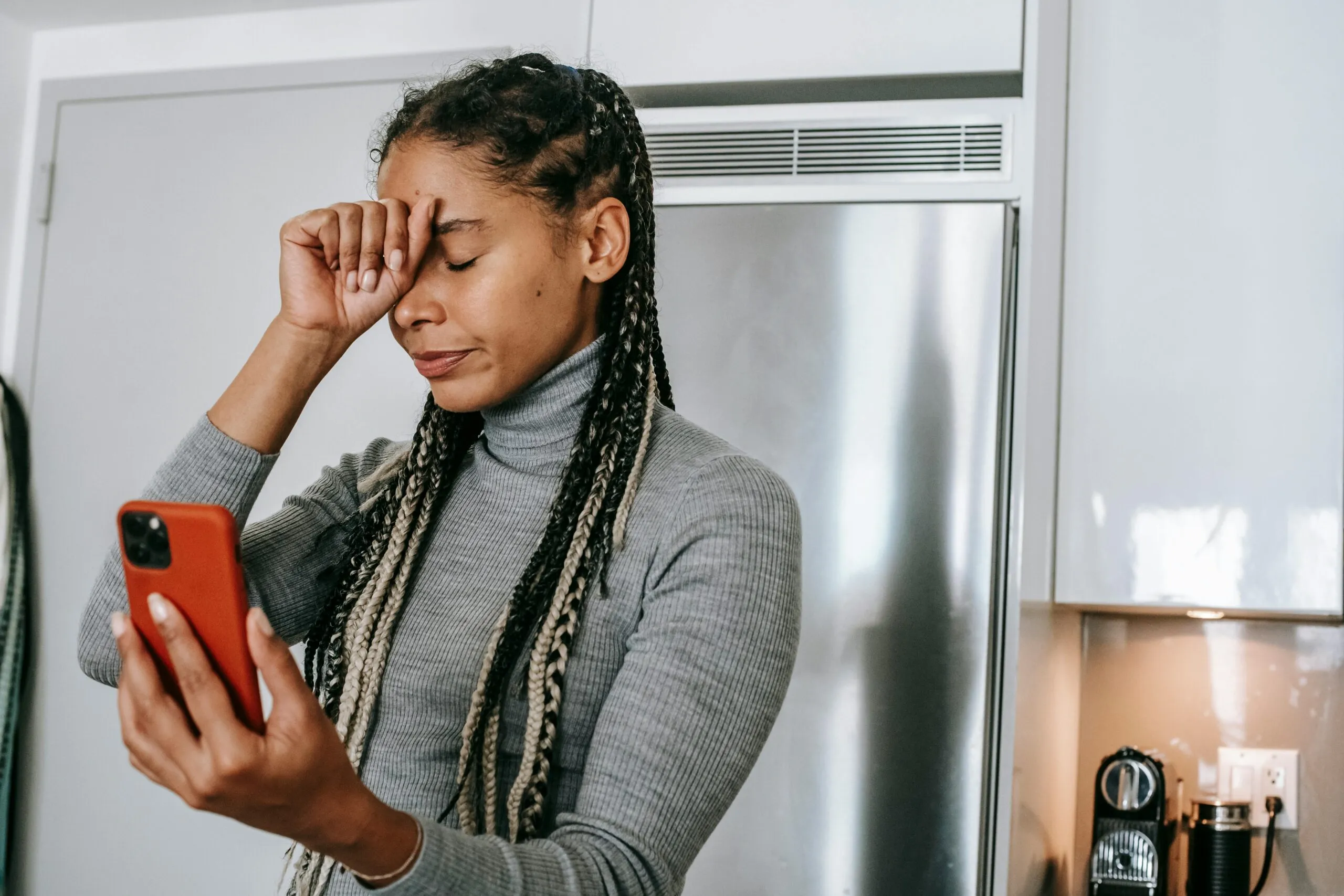
We have all been there — staring at a text message from our partner, trying to decode the tone, and wondering: "Are they upset? Are they ignoring me? Or am I overthinking this?" Misread texts are one of the most common sources of unnecessary conflict in relationships, and communication in relationships suffers when we rely on screens for conversations that need something more.
Texts are convenient — but when it comes to important or emotionally charged conversations, they can do more harm than good.
Why Texts Get Misread in Relationships
Unlike face-to-face or even phone communication, texting strips away the subtle cues that give words their meaning. There is no facial expression, tone of voice, body language, or timing to guide interpretation. Without those cues, our brains fill in the gaps — and they almost always fill them with our fears rather than the facts.
A short reply feels like rejection. A delayed response reads as avoidance. A period at the end of a sentence feels cold or passive-aggressive. In reality, your partner may simply be distracted, tired, or in a meeting — but the text gave you nothing to work with except your own interpretation.
This is especially true after betrayal or broken trust. When a nervous system is already on high alert for signs of danger, a neutral text can trigger a full emotional response — leading to conflict that was never necessary.
What Research Says About Communication in Relationships
Research from the Gottman Institute consistently shows that how couples communicate — not just what they say — is one of the strongest predictors of relationship satisfaction. Face-to-face communication allows for emotional attunement: reading each other's cues, adjusting in real time, and feeling genuinely heard.
Text-based communication, by contrast, lacks nearly all of these features. It is a useful tool for logistics — but a poor one for emotional connection.
When Texting Is Fine — and When It Is Not
Texting works well for
- Quick updates and logistics
- Encouragement during the day
- Sharing small moments
- Saying I love you
Texting is not right for
- Conflict or disagreements
- Emotional or vulnerable conversations
- Bringing up hurt feelings
- Important relationship decisions
When texting becomes the default for emotional conversations, it creates distance instead of connection — and over time that distance compounds.
Why In-Person Communication in Relationships Matters
Face-to-face conversations — or at minimum phone calls — bring a depth of connection that texts simply cannot replicate. When you talk in person you can:
- Hear tone and emotion in real time
- Clear up misunderstandings before they escalate
- See your partner's face and feel their presence
- Feel genuinely seen, heard, and understood
This kind of direct communication is at the heart of couples therapy — helping partners develop the skills to have hard conversations safely, without shutting down or escalating.
A Simple Communication Reset
Next time you are about to text something emotionally heavy or important, pause and ask yourself: "Would this be better said in person — or at least on a call?"
Most of the time the answer is yes. Choosing real conversation over text strengthens trust, reduces misunderstanding, and deepens connection — especially during difficult seasons in a relationship.
Real relationships are built on clarity, presence, and authentic connection. Save the important conversations for moments where you can truly see and hear each other.
Comments are closed